
Sudden Weight Gain and Trouble Conceiving: Why it Happens and What Helps
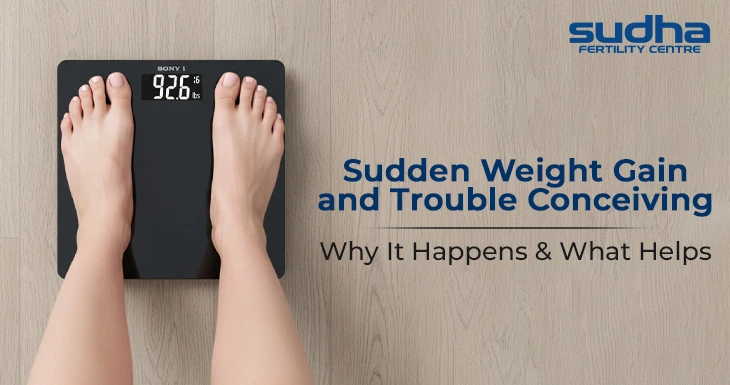
Sudden weight gain arrives with questions you didn’t expect. Clothes don’t fit, Periods shift, and fertility feels threatened. The connections feel real, but nobody has explained why. Maybe you’ve even been told just to eat less and exercise more, leaving you feeling like this is your fault.
Here is what needs to be said clearly: sudden, unexplained weight gain in a woman of reproductive age is very often not a willpower problem. It is a hormonal signal. When that weight gain appears alongside irregular periods or difficulty conceiving, the two are almost certainly connected. They are not two separate problems. There are two symptoms of one underlying hormonal issue that your body is trying to tell you about. This article explains what that issue might be, how to investigate it, and what actually helps.
Why Weight and Fertility Are Connected Hormonally
This might sound surprising, but the same hormones that control how your body stores fat also control whether you ovulate. Insulin, thyroid hormone, cortisol, estrogen, and androgens all regulate both metabolism and reproduction. When any of these hormones goes out of balance, both your weight and your fertility can be affected at the same time. This is not a coincidence. It is biology.
If you have unexplained weight gain AND irregular periods or infertility, they are almost certainly connected. They are not two different problems requiring two separate solutions. There are two signs that one hormonal system is out of balance. This is the critical insight that changes how you approach the problem. Treating the hormone treats both the weight and the fertility issue. Treating only the weight without addressing the hormone leaves you fighting an uphill battle.
The Three Main Hormonal Causes of Sudden Weight Gain
Three hormonal conditions account for the majority of sudden, unexplained weight gain in women. Understanding which one might be affecting you changes everything about how you approach treatment.
|
Cause |
What Happens | Fertility Impact |
Other Signs to Notice |
|
Hypothyroidism (underactive thyroid) |
The thyroid slows your metabolism, so your body burns fewer calories at rest. Bowel movement also slows, causing constipation that feels like weight gain. | Significant. Irregular or heavy periods. Target TSH should generally be below 4.0–4.5 mIU/L for fertility, though some clinicians target below 2.5 as a precautionary measure. | Fatigue, feeling cold all the time, dry skin, hair loss, constipation, depression, slow heartbeat |
|
PCOS with insulin resistance |
High insulin levels tell fat cells to store more fat (especially around the abdomen). High insulin also tells the ovaries to make more testosterone, which prevents ovulation. | Severe. This is the most common hormonal cause of weight-related infertility in India. The cycle is self-reinforcing: more weight worsens insulin resistance, which worsens PCOS. | Irregular or absent periods, acne (especially jawline), excess facial or body hair, dark patches on neck or underarms, thinning scalp hair |
|
Cortisol dysregulation (chronic stress) |
Chronically elevated cortisol increases appetite (especially for sugary foods), promotes belly fat storage, disrupts sleep, and suppresses ovulation. | Moderate. Sleep and stress directly affect the hormones that trigger ovulation. | Sleep problems, anxiety, irritability, abdominal weight gain with slim limbs, fatigue that doesn’t improve with rest |
Understanding the Insulin Resistance Cycle in PCOS
If you have PCOS or suspect you might, understanding the insulin resistance cycle is absolutely critical. This is the single most important concept to grasp, because it explains why simple calorie restriction often fails and why addressing the root cause works.
Here is how the cycle works. According to a study, 50–80% Of women with PCOS have insulin resistance – the core metabolic driver of both weight gain AND anovulation. There are different types of PCOS. First, your cells become resistant to insulin, usually due to genetics plus lifestyle factors. Your body then produces more and more insulin to compensate, because the cells are not listening to the signal. High insulin has several effects. It tells your fat cells to store more fat, especially around your belly. It also stimulates your ovaries to produce more testosterone. That excess testosterone prevents regular ovulation and causes PCOS symptoms like acne and facial hair. The extra weight you gain then worsens the insulin resistance. The cycle continues and gets worse.
This is the critical reframe: women with PCOS are not failing at weight loss because they lack discipline. They are fighting a hormonal headwind that makes weight loss genuinely harder. Calorie restriction alone often fails because it does not address the root problem, which is insulin resistance. Breaking the cycle requires addressing insulin resistance directly through medication like metformin or inositol, a low glycemic index diet (especially important in PCOS), and regular movement. When you treat the insulin resistance, weight loss becomes possible, and ovulation often returns.
Does Weight Itself Affect Fertility?
Yes. Beyond any diagnosed hormonal condition, excess body fat can directly affect fertility. Fat cells produce estrogen. When there is too much body fat, estrogen levels can become abnormally high, which disrupts the precise hormonal signals needed to trigger ovulation. Research shows that obesity (BMI above 30) increases the risk of not ovulating, miscarriage, and IVF failure. Being underweight (BMI below 18.5) can also disrupt ovulation.
There is a healthy weight window for fertility that varies by individual. For women with PCOS, the research is particularly detailed: losing just 5 to 10 percent of body weight can restore regular ovulation and dramatically improve chances of natural conception and IVF success. This is not about blame. It is about recognising a biological fact: weight and fertility are connected, and even modest weight changes matter when the underlying issue is hormonal.
Indian Women and BMI: Why Standard Ranges Don’t Apply
This matters more than most fertility articles acknowledge. Indian and South Asian women develop insulin resistance, type 2 diabetes, and metabolic problems at significantly lower BMIs than Western women. The standard WHO cutoffs (BMI 25 is overweight, 30 is obese) underdiagnose metabolic issues in Indian populations.
Indian guidelines (2009) recommend: BMI 23–24.9 classified as overweight and BMI 25 or above as obese. This is not arbitrary. It reflects the reality that South Asian bodies have a lower threshold for metabolic risk. This means a woman at BMI 24 might be told she is at a healthy weight by Western standards, but could already have significant insulin resistance. Additionally, waist circumference matters more than BMI. A waist circumference above 80 cm in Indian women indicates elevated metabolic risk even at a seemingly normal BMI. If you have experienced unexplained weight gain along with irregular periods or difficulty conceiving, your doctor should investigate for insulin resistance regardless of what a standard BMI chart suggests.
What Tests Should You Ask For?
If you have experienced sudden weight gain alongside irregular periods or infertility, you deserve a proper workup. Do not accept dismissal without investigation. Here are the Fertility tests that should be ordered:
|
Test |
What It Detects |
When Recommended |
| TSH, T3, T4, anti-TPO antibodies | Hypothyroidism and autoimmune thyroid disease. Target TSH should generally be below 4.0–4.5 mIU/L for fertility, though some clinicians target below 2.5 as a precautionary measure. | All women with unexplained weight gain |
| Fasting glucose, fasting insulin, HbA1c | Insulin resistance (calculate HOMA-IR index from fasting glucose and insulin). Pre-diabetes and diabetes. | Women with abdominal weight gain, PCOS signs, family history of diabetes |
| AMH, FSH, LH, Estradiol (Day 2-4 of cycle) | Ovarian reserve and PCOS pattern (elevated LH: FSH ratio in PCOS). Hypothalamic issues. | Any woman planning a pregnancy or with irregular cycles |
| Testosterone (total and free), DHEA-S, SHBG | Elevated androgens in PCOS. Adrenal androgen excess. | Women with acne, facial hair, or PCOS suspicion |
| Prolactin | Hyperprolactinaemia, which can cause weight gain and irregular cycles. | Irregular cycles or unexplained weight gain |
| Transvaginal ultrasound with antral follicle count | Polycystic ovary pattern. Other uterine or ovarian problems. Follicle count. | Fertility evaluation and PCOS assessment |
| Lipid profile (cholesterol, triglycerides, HDL, LDL) | Metabolic syndrome risk and cardiovascular risk associated with PCOS and insulin resistance. | Women with PCOS, obesity, or family history |
| Vitamin D and Vitamin B12 | Deficiencies extremely common in Indian women. Contribute to fatigue, weight gain, and infertility. | All women with fatigue, weight gain, or infertility |
Note: Do not accept dismissal without at least thyroid, insulin resistance, AMH, and androgen testing.
BMI Ranges for Indian Women: South Asian Standards
|
BMI (kg/m2) |
Category (Indian) |
Fertility and Metabolic Implications |
|
Below 18.5 |
Underweight |
Low body fat can disrupt ovulation. Risk of amenorrhea. Investigate the underlying cause. |
|
18.5 to 22.9 |
Healthy |
Generally optimal for fertility and metabolic health. |
|
23 to 24.9 |
Overweight |
Indian-specific cutoff. Insulin resistance risk begins here. Investigate if fertility issues are present. |
|
25 to 29.9 |
Obese (Class I) |
Significant fertility impact. PCOS symptoms often manifest. Weight loss of 5 to 10 percent can improve ovulation. |
|
30 and above |
Obese (Class II/III) |
Strong fertility impact. Increased miscarriage and IVF failure risk. Medical support often needed. |
What Can You Actually Do?
Treatment depends on identifying the underlying cause. But the framework is consistent across all hormonal causes: treat the hormone, and the weight and fertility often improve together.
- Get properly evaluated. Do not accept ‘just lose weight’ without investigation. Ask for the tests listed above. If a doctor dismisses your symptoms, seek a second opinion.
- Treat the underlying cause. If hypothyroid: levothyroxine replacement. If insulin resistant: metformin or inositol alongside dietary changes. If cortisol-driven: stress management, sleep improvement, sometimes counselling. These work because they address the root issue.
- Use targeted nutrition. For PCOS: a low glycaemic index diet using Indian foods (see Sudha’s PCOS diet article). For thyroid: adequate iodine and selenium. For all: reduce ultra-processed foods and added sugars.
- Move your body regularly. Resistance training plus moderate aerobic exercise. Prioritise regular movement over intense occasional workouts. Walking is genuinely valuable. Weight loss, when it happens as a result of treating the underlying cause, comes more easily.
The key reframe matters: treat the hormonal problem, and the weight often takes care of itself. Treat the weight without addressing the hormones, and you fight an uphill battle.
When Should You Consult a Fertility Specialist?
Consult a fertility specialist if you have:
- Experienced 5 kg or more of unexplained weight gain in under 6 months.
- Irregular periods or no periods.
- Been trying to conceive for 6 months or longer (if you are 35 or older) or 12 months or longer (if you are under 35).
- Been told to ‘just lose weight’ without a proper workup being done.
- Symptoms suggesting PCOS (irregular periods, acne, facial hair) or thyroid disease (fatigue, cold intolerance, hair loss).
A fertility specialist can investigate both the weight and fertility questions together.
Your Weight Gain Is Telling You Something
If you have experienced sudden weight gain alongside irregular periods or difficulty conceiving over a few months, your body is signaling something that deserves proper medical investigation, not dismissal or blame. You are not failing at willpower. You are showing signs of a treatable hormonal imbalance.
At Sudha Fertility Centre, we investigate weight gain as an integral part of a full fertility workup. Our specialists order the right tests, identify the underlying hormonal cause, and work with you on a treatment plan that addresses that cause. Whether you have hypothyroidism needing hormone replacement, PCOS needing insulin sensitisation, or stress-related cortisol dysregulation needing lifestyle support, there is a path forward.
Sudha Fertility Centre has dedicated teams across Bangalore, Hyderabad, Chennai, and Coimbatore. If a cycle is not successful or your weight and fertility are not improving as expected, the team will review what happened, discuss what can be adjusted, and outline the next steps before any further decisions are made.
Disclaimer: This article is for general informational purposes only and does not constitute medical advice. Weight gain management and fertility treatment must always be done in consultation with a qualified fertility specialist or endocrinologist based on individual assessment.

Dr. S. Pradeepa is a fertility specialist at Sudha Fertility Centre, Erode, with expertise in IVF, IUI, ICSI, PCOS, and endometriosis. She holds MBBS, DGO, DNB (OG), and a Fellowship in Reproductive Medicine. Known for her patient-centric approach, she provides personalized, evidence-based care and reviews medical content to guide informed fertility decisions.