
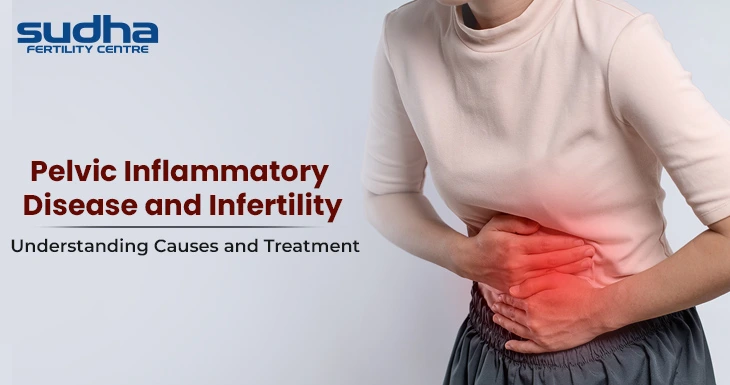
Pelvic Inflammatory Disease and Infertility: Understanding Causes and Treatment
During a fertility workup, an HSG or laparoscopy reveals scarring or blockage of the fallopian tubes. The doctor explains that pelvic inflammatory disease may have caused the damage. For many women, this arrives as unexpected news. There was no memory of obvious infection, no fever, no severe pain, no hospitalization. The realization arrives years later: a woman can have had PID without ever knowing it, and only discover the damage when fertility evaluation reveals scarred or blocked tubes.
This situation is more common than most women realize. Pelvic inflammatory disease (PID) is often called a silent infection because many cases produce no obvious symptoms or only mild ones that are easy to dismiss. A woman can have had PID months or years ago without ever knowing it, and only discover the damage when fertility evaluation reveals scarred or blocked tubes. Understanding PID, recognizing subtle symptoms, and knowing the difference between treating the infection and reversing the damage are essential for protecting your fertility.
What Is Pelvic Inflammatory Disease?
Pelvic inflammatory disease is an infection of the upper female reproductive organs: the uterus, fallopian tubes, and ovaries. The infection usually starts in the lower reproductive tract (the cervix or vagina) and travels upward. The most common cause is a sexually transmitted infection, particularly chlamydia or gonorrhea, which account for about 90 percent of cases. PID can also occur without any STI when normal vaginal bacteria travel upward after childbirth, miscarriage, abortion, IUD insertion, or pelvic surgery.
The damage from PID is primarily to the fallopian tubes. The infection causes inflammation and can lead to scarring, partial blockage, or complete blockage of the tubes. The delicate inner lining of the tubes and the tiny hair-like structures (cilia) that move the egg toward the uterus can be permanently damaged. This tubal damage is what causes most cases of PID-related infertility. The critical point: antibiotics treat the infection effectively, but they do NOT reverse scarring or blockage that has already occurred. Early recognition and treatment preserve fertility by preventing permanent damage.
The Silent PID Problem
Many cases of PID are silent or mild. Studies show that approximately 10 to 15 percent of women with untreated Chlamydia develop PID. Many of these cases produce no symptoms or very subtle ones that are easy to overlook or attribute to something else. A woman might have mild pelvic discomfort that feels like period cramps, or a slight increase in vaginal discharge or mild pain during intercourse. These symptoms are managed with over-the-counter pain relief.
The fertility consequence of silent PID is severe. Many women who present with tubal-factor infertility during fertility evaluation have no clear history of ever having experienced obvious PID symptoms. The tubal damage is discovered only through testing. Worldwide, PID is the leading preventable cause of infertility. This preventability matters: earlier recognition and treatment dramatically reduce the risk of permanent damage.
Any unusual pelvic symptoms, even mild ones, deserve evaluation. Do not wait for symptoms to become severe. Do not dismiss a vague ache or mild discharge as insignificant.
Symptoms of Pelvic Inflammatory Disease
When PID does cause symptoms, they can include lower abdominal or pelvic pain (dull or sharp), unusual vaginal discharge (possibly with odour), pain during intercourse (especially deep pain), pain or burning during urination, bleeding between periods or after intercourse, and fever with chills in more severe cases. Symptoms may worsen during menstruation.
These symptoms can easily be mistaken for other conditions: ovarian cysts, urinary tract infections, irritable bowel syndrome or endometriosis . This similarity is one reason PID is often missed or diagnosed late. Severe PID with high fever, vomiting, and severe pain requires emergency evaluation. Mild PID may cause only subtle symptoms and is easy to dismiss or delay.
|
Symptom |
What It Suggests |
Urgency |
| Lower pelvic or abdominal pain (dull or sharp) | Most common PID symptom; can be mild and easy to dismiss |
Soon |
| Unusual vaginal discharge (yellow, green, with odour) | Often a sign of infection |
Soon |
| Pain during intercourse, especially deep pain | Classic PID symptom |
Soon |
| Burning or pain during urination | May indicate urinary or upper genital tract infection |
Soon |
| Bleeding between periods or after intercourse | Can indicate cervical inflammation or PID |
Soon |
| Severe lower abdominal pain with high fever (over 38.5°C), nausea, vomiting | Severe PID; possible tubo-ovarian abscess |
Emergency |
| Pain plus pregnancy or recent pelvic procedure | Higher risk situation; possible sepsis |
Emergency |
| Mild ache that does not go away over days | Could be silent PID; do not ignore |
Soon |
Who Is at Risk for Pelvic Inflammatory Disease?
|
Risk Factor |
Risk Level |
What to Do |
| Untreated chlamydia or gonorrhea |
High |
Get tested if sexually active; treat promptly if positive; treat partner too. |
| Previous episode of PID |
High |
Risk of repeat infection is high; address new symptoms quickly |
| Sexually active and under 25 |
High |
A younger cervix is more vulnerable; routine STI screening is sensible if multiple partners. |
| Multiple sexual partners or partners with multiple partners |
High |
Use condoms; routine STI screening for both partners |
| First 3 weeks after IUD insertion |
Moderate (brief) |
Brief risk window; after 3 weeks, the IUD does not increase ongoing risk |
| Recent miscarriage, abortion, or childbirth |
Moderate (brief) |
Watch for fever, severe pain, and unusual discharge in the following weeks |
| Recent pelvic surgery (hysteroscopy, cervical procedure) |
Moderate (brief) |
Antibiotics often given prophylactically; report post-procedure symptoms |
| Douching |
Moderate |
Stop douching; it disrupts vaginal bacteria and increases infection risk |
| Long-term monogamous relationship with a screened partner, consistent condom use |
Lower |
Maintain healthy practices; routine gynaecological check-ups |
How Does PID Affect Fertility?
Pelvic Inflammatory Disease affects fertility through three main mechanisms.
First, Tubal Damage: Infection and inflammation scar the delicate inner lining of the fallopian tubes and destroy the cilia that move the egg toward the uterus. The tube may become partially narrowed or completely blocked. Even partial damage can prevent the egg and sperm from meeting.
Second, Hydrosalpinx: In some cases, the end of the fallopian tube becomes blocked, and fluid accumulates inside, creating a fluid-filled, swollen tube. The fluid inside a hydrosalpinx is toxic to embryos and can significantly reduce IVF success rates if not addressed.
Third, Pelvic Adhesions: Scar tissue can form between organs after infection, distorting pelvic anatomy, preventing the ovary from releasing eggs near the tube, and causing chronic pelvic pain.
The numbers matter: According to a study, about 12.6 percent of women develop tubal-factor infertility after a single episode of PID. This risk roughly doubles with each subsequent episode. Research states that, after three or more episodes, approximately 50 percent of women have tubal-factor infertility. Beyond infertility, PID increases the risk of ectopic pregnancy (pregnancy in the tube instead of the uterus) approximately 4- to 10-fold, depending on the severity of tubal damage.
Not every woman with PID becomes infertile. Many conceive naturally, especially after a single mild episode, if treated promptly. The fertility outlook depends on the number of episodes, severity, how quickly treatment was given, and individual healing capacity.
PID Treatment: What Antibiotics Can and Cannot Do
Antibiotics are the standard treatment for PID and work well at clearing the infection. Most women are treated as outpatients with oral antibiotics for 14 days. More severe cases require hospitalization and IV antibiotics. The partner should also be tested and treated to prevent reinfection.
What antibiotics CAN do?
- Clear the active infection,
- Reduce ongoing damage,
- Prevent further scarring, and
- Treat associated symptoms.
What antibiotics CANNOT do?
- Reverse scarring or adhesions that have already formed,
- Reopen blocked tubes, or
- Restore damaged cilia.
This distinction is critical. The earlier the PID is recognized and treated, the less permanent damage occurs. A woman whose PID is treated within days has a much better fertility outcome than one whose treatment is delayed by weeks. This is why any pelvic symptoms deserve prompt evaluation, not a wait-and-see approach.
Fertility Options after PID
Different starting points lead to different treatment paths.
- Mild PID treated promptly with no obvious tubal damage on HSG: Natural conception should be attempted for 6 to 12 months. Most of these women conceive without intervention.
- Mild PID with mild tubal narrowing on HSG: IUI may help, or natural conception can be attempted.
- Moderate tubal damage with partial blockages: IVF is often the most reliable path.
- Severe damage, hydrosalpinx, or completely blocked tubes: IVF is the standard treatment. If hydrosalpinx is present, the affected tube is often removed before IVF because the toxic fluid significantly reduces success rates.
IVF success rates after PID-related infertility are similar to those of other tubal-factor causes. The eggs, uterus, and usually the ovaries are not affected by PID. Only the tubes are damaged. Removing the tubes from the equation through IVF gives most women excellent chances of pregnancy.
|
Scenario |
What Typically Happens |
Fertility Outlook |
| Mild PID, treated promptly | Antibiotics clear infection; minimal damage; tubes usually remain patent | Good – Most women conceive naturally; ~88% retain fertility |
| Moderate PID, treatment delayed | Some scarring and adhesions; partial tubal damage | Variable – May need IUI; IVF if not pregnant within 6–12 months |
| Severe PID, late or inadequate treatment | Major scarring; possible blocked tubes; possible adhesions | Reduced – IVF often needed; success rates with IVF |
| Recurrent PID (3 or more episodes) | Cumulative tubal damage; bilateral involvement common; ~50% develop tubal-factor infertility | Reduced – IVF first-line; good outcomes with IVF |
| Hydrosalpinx (fluid-filled tube) | Toxic fluid reduces IVF success significantly if not addressed | Good with proper management – affected tube removed before IVF; success rates normalise |
| Bilateral tubal blockage | Both tubes are blocked; a spontaneous pregnancy is not possible | IVF only path – success rates similar to other tubal-factor cases |
How to Prevent Pelvic Inflammatory Disease
Several practical steps reduce PID risk. Practice safer intercourse using condoms, which reduce STI risk significantly. Get STI testing if sexually active, especially with a new partner or multiple partners. Both partners should be tested. Treat STIs promptly when found; Chlamydia and Gonorrhea are easily curable with antibiotics in the early stages. Avoid douching, which disrupts natural vaginal bacteria and increases infection risk. Use if only recommended by a doctor. If you have had PID before, address any new symptoms quickly because the recurrence risk is high. Maintain routine gynecological check-ups, especially before starting to try for pregnancy.
STI screening is not routine in general practice but can be specifically requested during a gynecological visit. A simple urine or vaginal swab test for Chlamydia and Gonorrhea is widely available and inexpensive.
Moving Forward After PID
Pelvic inflammatory disease can affect fertility through tubal damage, but it does not make pregnancy impossible. With proper evaluation, treatment options exist that give most women excellent chances. If you suspect you may have had PID or have been told it affected your fertility, the next step is a comprehensive evaluation at a fertility centre.
At Sudha Fertility Centre, the team offers thorough evaluation, including HSG, laparoscopy when needed, and IVF when appropriate. There is no judgment in our consultations, only clear, honest guidance and treatment plans tailored to your situation. Book a free consultation at any of our centres in Bangalore, Hyderabad, Chennai, Coimbatore, or Erode.
Disclaimer: This article is for general informational purposes only and does not constitute medical advice. Pelvic inflammatory disease evaluation and treatment must be individualised based on a complete clinical assessment. Always consult qualified healthcare providers for diagnosis and treatment recommendations specific to your situation.

Dr. S. Pradeepa is a fertility specialist at Sudha Fertility Centre, Erode, with expertise in IVF, IUI, ICSI, PCOS, and endometriosis. She holds MBBS, DGO, DNB (OG), and a Fellowship in Reproductive Medicine. Known for her patient-centric approach, she provides personalized, evidence-based care and reviews medical content to guide informed fertility decisions.