
IVF vs. ICSI: Understanding When and Why Each Treatment Is Recommended
IVF vs. ICSI: Side-by-Side Comparison
-
- Fertilization Method – sperm penetrates the egg naturally in IVF; a single sperm is injected directly into the egg cytoplasm in ICSI
- Fertilization Rate -conventional IVF achieves 65–75% per egg with normal sperm; ICSI achieves 80–85% per egg in male infertility cases
- Live Birth Rate – comparable between IVF and ICSI when sperm quality is normal; no advantage to ICSI in non-male-factor cases
- Primary Indication – IVF suits female factor, unexplained infertility, and normal semen; ICSI is indicated for severe male factor, surgical sperm, failed IVF fertilization, and PGT cycles
- Lab Skill Required – IVF requires standard embryology; ICSI demands specialist micromanipulation and an operating microscope with higher embryologist expertise
- Total Fertilization Failure Risk – Total fertilization failure occurs in approximately 5 to 15 percent of conventional IVF cycles, varying by the underlying infertility diagnosis (lower in pure tubal factor, higher in unexplained infertility and asthenozoospermia). ICSI reduces this risk to roughly 1 to 6 percent, though it does not eliminate the risk entirely
- Surgical Sperm Compatibility – conventional IVF is not suitable when too few sperm are retrieved; ICSI is ideal and mandatory with TESA, TESE, or PESA sperm
Only the fertilization step differs between IVF and ICSI – every other stage of the treatment cycle, from ovarian stimulation to embryo transfer, remains exactly the same.
Most couples going into IVF have heard the term ICSI at some point, but not always in a way that made it clear what it actually means or how it is different. When the doctor brings it up in a consultation, it can feel like one more thing to process on top of everything else. This is one of the most common points of confusion in fertility treatment, and it is completely understandable, because the two procedures sound very similar and are often described together.
This guide explains what IVF and ICSI actually are, what the difference between them is, when ICSI is clinically recommended, and when conventional IVF is sufficient. The goal is to help couples walk into their next appointment prepared, with the right questions ready, rather than trying to process everything in the moment.
What Is Conventional IVF?
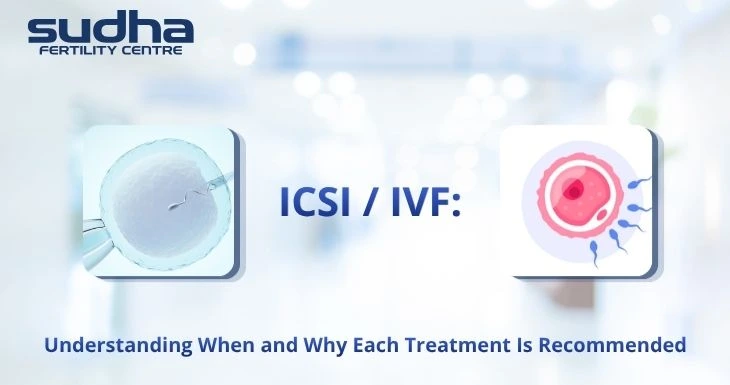
In conventional IVF, eggs are retrieved from the ovaries and placed in a laboratory dish with a prepared sperm sample. Hundreds of thousands of sperm are placed alongside each egg. The sperm compete and one penetrates the egg naturally, in a process that mirrors what happens during natural conception but takes place in a controlled lab environment.
The resulting embryos are monitored over three to five days, and the highest-quality embryo or embryos are selected for transfer to the uterus. Everything else in the process, from the ovarian stimulation injections to the embryo transfer itself, follows the same steps as an ICSI cycle.
A simple way to think of it: conventional IVF Treatment gives sperm a head start in a controlled environment, but the sperm still do the work of fertilization themselves.
What Is ICSI?
ICSI, pronounced ixy, stands for Intracytoplasmic Sperm Injection. It is an additional step that takes place within an IVF cycle, specifically at the fertilization stage. Instead of placing sperm near the egg and allowing natural fertilization, an embryologist selects a single sperm under a high-powered microscope and injects it directly into the centre of the egg using a fine glass needle.
This bypasses all the natural barriers to fertilization, including the need for the sperm to penetrate the egg’s outer layer (the zona pellucida) independently. It requires specialist embryology skill and specialized micromanipulation equipment that not all labs are equipped with.
A simple way to think of it: if conventional IVF is a competition, ICSI is a precision delivery directly to the destination.
The Key Difference: Only the Fertilization Step Changes
This is the most important point to understand, IVF and ICSI are not two separate treatments. ICSI is a technique used within an IVF cycle.
Everything before and after fertilization is identical: the ovarian stimulation, the egg retrieval procedure, the embryo culture in the lab, and the embryo transfer. The only difference between a conventional IVF cycle and an ICSI cycle is how the egg is fertilized in the laboratory.
ICSI is not a more advanced or better version of IVF in all situations. It is a specific solution for a specific problem: difficulty with natural fertilization, usually because of sperm quality issues.
IVF vs. ICSI: Side-by-Side Comparison
The table below compares both techniques across the factors that matter most clinically.
|
Factor |
Conventional IVF | ICSI |
Key Takeaway |
|
Fertilization method |
Sperm placed near egg; penetrates naturally | Single sperm injected directly into egg cytoplasm | Only this step differs between the two |
|
Fertilization rate |
65 to 75% per egg (normal sperm) | 80 to 85% per egg (male infertility cases) | Higher in ICSI when sperm quality is poor |
|
Live birth rate |
Comparable to ICSI in non-male-factor cases | Comparable to IVF in non-male-factor cases | No difference for normal sperm |
|
Primary indication |
Female factor, unexplained infertility, normal semen | Severe male factor, surgical sperm, failed IVF fertilization, PGT cycles | Male infertility is the main ICSI driver |
|
Lab skill required |
Standard embryology | Specialist micromanipulation; operating microscope | ICSI requires higher embryologist expertise |
|
Total fertilization failure risk |
5 to 8% of cycles | 1 to 3% of cycles | ICSI reduces but does not eliminate this risk |
|
Surgical sperm compatibility |
Not suitable (too few sperm in sample) | Ideal, even a single retrieved sperm can be used | ICSI is mandatory with TESA, TESE, or PESA sperm |
|
PGT cycles |
Not recommended, risk of sperm DNA contamination on biopsy | Recommended by international guidelines (ESHRE and ASRM) | ICSI standard for PGT regardless of sperm quality |
The key take away from this comparison: ICSI improves fertilization rates in cases where sperm quality is poor, but it does not improve live birth rates in couples where sperm parameters are normal. A major randomized controlled trial published in a study confirmed this finding, showing that ICSI was not superior to conventional IVF in couples without male infertility concerns. This has both clinical and financial implications for couples who are offered ICSI without a clear male-factor diagnosis.
When is ICSI Recommended?
ICSI has specific clinical indications. It is not a default upgrade. The doctor recommends it when there is a clear reason why conventional fertilization is unlikely to succeed.
|
Patient Situation |
Recommended |
Reason |
| Normal semen analysis, female factor only (PCOS, blocked tubes, endometriosis) |
IVF |
Sperm can fertilize eggs naturally in the lab; ICSI adds cost without clinical benefit |
| Mild male factor (borderline count or motility, not severe) |
IVF or ICSI |
Doctor assesses actual sperm quality on day of retrieval; split IVF and ICSI may be used |
| Varicocele, Severe oligospermia or poor motility (asthenospermia) |
ICSI |
Too few or too poorly motile sperm to compete in conventional fertilization |
| Azoospermia with surgically retrieved sperm (TESA, TESE, PESA) |
ICSI |
Only a few sperm are retrieved; each one must be used precisely |
| Previous IVF cycle with failed or very poor fertilization |
ICSI |
ICSI reduces risk of repeat total fertilization failure |
| PGT-M (Monogenic Disorders) planned |
ICSI |
Mandatory per ESHRE & ASRM; essential to avoid sperm DNA contamination during biopsy |
| PGT-A (Aneuploidy Testing) planned |
IVF or ICSI |
Insufficient evidence per ASRM 2024; ICSI not routinely recommended for aneuploidy screening |
| Using frozen or thawed eggs (oocyte cryopreservation) |
ICSI |
Zona pellucida may harden with freeze-thaw; ICSI improves fertilization rates in this setting, though conventional IVF may be adequate in some cases |
| Vasectomy reversal with potential anti-sperm antibodies |
ICSI |
Antibodies may block natural sperm penetration; ICSI bypasses this barrier |
| Unexplained infertility with normal semen analysis |
IVF |
No evidence ICSI improves outcomes in this group; adds unnecessary cost |
When Is Conventional IVF Sufficient?
This section matters because ICSI is being used increasingly in cases where the evidence does not support it.
Conventional IVF without ICSI is appropriate when:
- Semen parameters are within normal range count, motility, and morphology are all acceptable on the semen analysis
- The fertility issue is female factor only PCOS, blocked tubes, endometriosis, or ovulatory disorders where sperm quality is not in question
- Unexplained infertility with a normal semen analysis no evidence from current research that ICSI improves live birth rates in this group
- Mild male factor where borderline sperm parameters are present but not severe enough to prevent natural fertilization in a lab setting
Live birth rates were comparable. This is an important finding because it suggests that many ICSI cycles are being performed in cases where conventional IVF would have produced the same outcome at lower cost.
A good fertility centre will recommend ICSI only when there is a clinical reason specific to that couple’s situation.
Does ICSI Improve Success Rates?
The honest answer is: it depends on what is being measured and who the patient is.
For couples with male factor infertility, ICSI does improve fertilization rates per egg, from around 65 to 75% with conventional IVF to 80 to 85% with ICSI. When sperm quality is poor because of hormonal conditions, bypassing the natural fertilization process reduces the risk of eggs remaining unfertilized. This is a meaningful clinical benefit.
However, a higher fertilization rate does not automatically translate to a higher live birth rate. More fertilized eggs mean more embryos to work with, but the quality of those embryos depends on many factors beyond the fertilization technique. For couples without male infertility, study confirms that ICSI did not improve live birth rates compared to conventional IVF.
The implication is straightforward: ICSI is the right choice when male infertility is the clinical issue. It is not a universal upgrade that improves outcomes for everyone. Couples should feel comfortable asking their doctor to explain the specific reason ICSI is being recommended for their situation.
Can IVF and ICSI Be Combined?
Yes, and this is sometimes the right approach. When the male factor is borderline or uncertain, some fertility centres use a split IVF and ICSI approach: half the retrieved eggs are fertilized conventionally using IVF, and the other half are fertilized using ICSI. This allows the embryology team to compare how sperm perform under both conditions and provides a safeguard against unexpected fertilization failure in either group.
At Sudha Fertility Centre, the embryology team makes this assessment based on the actual sperm sample prepared on the day of egg retrieval. The decision is made in real time based on what the sperm look like under the microscope that day, not solely on the semen analysis results from weeks earlier.
When to See a Specialist
Whether IVF or ICSI is the right approach depends on the semen analysis results, the diagnosis, and the treatment history of both partners. It is not a decision to make based on a general preference or what someone else was recommended, because the clinical indication is specific to each couple.
Couples who have been given both options, or who are unsure why ICSI was recommended, should feel comfortable asking the doctor to explain the specific clinical reason. A good fertility team will always have a clear answer.
Conclusion
IVF and ICSI are not competing treatments. ICSI is a technique used within an IVF cycle when natural fertilization in the lab is unlikely to succeed, primarily because of sperm quality issues. When sperm parameters are normal, conventional IVF delivers comparable live birth rates at lower cost.
Understanding this distinction helps couples ask better questions and feel more confident going into their consultation. The doctor’s recommendation will be based on the actual semen analysis, the diagnosis, and what happened in any previous cycles, not on a general assumption that one approach is universally better.
At Sudha Fertility Centre, Dr. S. Dhanabagyam, Dr. S. Pradeepa, and the embryology team evaluate sperm quality on the day of egg retrieval and make real-time recommendations based on what the sample shows that day. Sudha Fertility Centre has dedicated teams and advanced embryology labs across Bangalore, Hyderabad, Chennai, and Coimbatore to support couples through every stage of treatment.
If a cycle is not successful, the team will review what happened, discuss what can be adjusted, and outline the next steps before any further decisions are made.
Disclaimer: This article is for general informational purposes only and does not constitute medical advice. Treatment decisions should always be made in consultation with a qualified fertility specialist based on individual clinical assessment.
Frequently Asked Questions
What is the main difference between IVF and ICSI?
When is ICSI recommended over IVF?
Is ICSI better than IVF for everyone?
Does IVF or ICSI have a higher success rate?
Can IVF and ICSI be done together in the same cycle?
Is ICSI required for surgically retrieved sperm?
Is ICSI needed for frozen egg cycles?
Does ICSI carry any additional risks compared to IVF?
Does ICSI guarantee fertilisation?
What happens if IVF fails to fertilise eggs? Can ICSI be used as a rescue?

Dr. S. Pradeepa is a fertility specialist at Sudha Fertility Centre, Erode, with expertise in IVF, IUI, ICSI, PCOS, and endometriosis. She holds MBBS, DGO, DNB (OG), and a Fellowship in Reproductive Medicine. Known for her patient-centric approach, she provides personalized, evidence-based care and reviews medical content to guide informed fertility decisions.