

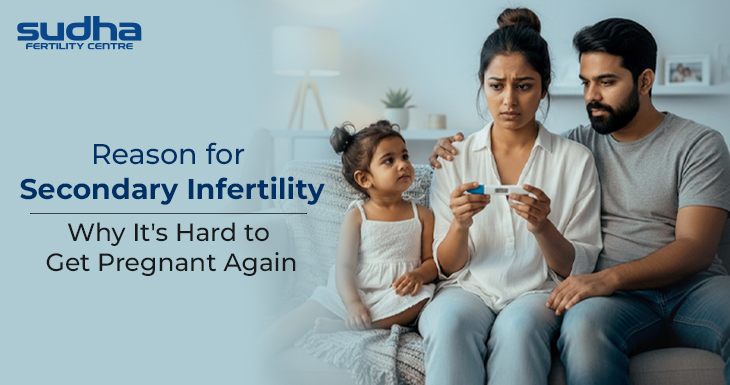
Reason for Secondary Infertility: Why It’s Hard to Get Pregnant Again
Having one child and then struggling to conceive again can be confusing and emotionally difficult. This is called Secondary Infertility, and it is more common than most people expect. The reason for secondary infertility is not always obvious, and in many cases, couples assume that because they conceived before, there cannot be a problem now.
The reality is that fertility can change Age, hormonal shifts, changes in health, and new medical conditions can all affect the ability to conceive after a first child. Getting to the reason for secondary infertility early makes a significant difference in treatment outcomes.
What Is Secondary Infertility?
Secondary infertility is defined as the inability to conceive or carry a pregnancy to term after previously giving birth. It applies to couples who are unable to conceive after their first child despite trying regularly.
According to the Studies, one in six people of reproductive age worldwide experience infertility at some point in their lifetime, and secondary infertility accounts for a significant portion of those cases.
The general guideline is the same as primary infertility: if conception has not occurred after 12 months of regular unprotected intercourse (or 6 months if the woman is over 35), a fertility evaluation is recommended.
Primary vs Secondary Infertility: What Is the Difference?
Primary infertility refers to couples who have never been able to conceive. Secondary infertility refers to those who have had at least one successful pregnancy but are now struggling to conceive again.
While both share similar medical causes, secondary infertility often involves factors that developed after the first pregnancy, such as uterine scarring from a caesarean section, age-related decline in egg quality, or changes in sperm health. The emotional experience also differs. This is exactly why it is hard to get pregnant the second time for many couples who had no issues with their first pregnancy. Couples with secondary infertility sometimes delay seeking help because they assume their prior success means everything is fine.
Common Causes of Secondary Infertility
These are the most frequently identified reasons for not getting pregnant after the first child, and each one points to a distinct reason for secondary infertility.
- Age and egg quality: Female fertility begins to decline gradually after 32 and more noticeably after 35. Even a gap of two to three years between pregnancies can affect egg quality and ovarian reserve. By age 35, the monthly chance of natural conception drops significantly, making age one of the leading reasons for second time infertility.
- Ovulation disorders: PCOS, thyroid dysfunction, elevated prolactin, and other hormonal imbalances can develop or worsen after a first pregnancy. Ovulation disorders in secondary infertility are a common finding, particularly in women who gained significant weight postpartum or experienced thyroid changes after delivery.
- Uterine conditions after first pregnancy: A caesarean section, postpartum infection, or uterine surgery can lead to scarring or adhesions inside the uterus. Conditions like fibroids, polyps, and adenomyosis can also develop or grow larger between pregnancies, affecting implantation and making it harder to conceive.
- Fallopian tube damage: Pelvic inflammatory issues, postpartum infections, or complications from a prior delivery can cause tubal scarring or blockages. This prevents sperm from reaching the egg and is a medically significant cause of problems getting pregnant the second time.
- Hormonal imbalance after pregnancy: Breastfeeding, postpartum thyroiditis, and changes in body weight can all disrupt the hormonal balance needed for regular ovulation. Some women develop new hormonal conditions after their first child that were not present before.
- Male factor infertility: Sperm quality can change over time due to age, lifestyle factors, varicocele, or new health conditions. A man’s sperm health at 35 may be different from what it was at 28. Male factor secondary infertility contributes to a significant proportion of secondary infertility cases and should be evaluated early alongside the female partner.
- Lifestyle changes: Increased stress, disrupted sleep, weight gain, and changes in diet after having a child can all affect reproductive health in both partners. These are among the more overlooked reasons for not getting pregnant when everything else appears normal.
Secondary Infertility Symptoms and Signs to Watch For
Secondary infertility does not always present with obvious symptoms. However, the following signs may indicate an underlying issue:
- Irregular, absent, or unusually painful periods after the first delivery
- Significant changes in cycle length or flow compared to before
- Unexplained weight gain or difficulty losing postpartum weight
- New symptoms of PCOS or thyroid dysfunction such as hair loss, fatigue, or skin changes
- A history of postpartum infection, retained placenta, or uterine complications
- Recurrent miscarriage after the first child
- Known changes in the male partner’s health, such as varicocele or hormonal issues
These are the most common signs you cannot get pregnant again and may indicate an underlying condition. Many causes of secondary infertility have no visible symptoms at all. The absence of obvious signs does not mean everything is functioning normally, which is why a structured fertility evaluation after first child is the most reliable approach. Understanding the reason for secondary infertility begins with recognising these early signs and getting the right tests done.
Reason for Not Getting Pregnant When Everything is Normal
A common and frustrating situation is when all routine tests come back normal but conception still does not occur. This applies to secondary infertility just as it does to primary infertility.
Subtle issues such as sperm DNA fragmentation, poor endometrial receptivity, mild hormonal fluctuations, or early-stage ovarian reserve decline can all affect fertility without showing up on standard tests. Advanced investigations, including AMH testing, sperm DNA analysis, and endometrial receptivity assessment, are often required to identify these causes.
Secondary Infertility Treatments: What Doctors Recommend
Treatment for secondary infertility depends entirely on the identified reason for secondary infertility, and options range from simple medication to assisted reproductive procedures. Options include:
- Ovulation induction: Medications or hormone injections to stimulate regular egg release, used when ovulation disorders are confirmed.
- Laparoscopy: Laparoscopy is a minimally invasive procedure to treat endometriosis, clear tubal blockages, or remove uterine adhesions and fibroids.
- Hysteroscopy: Used to diagnose and treat polyps, adhesions, or scarring inside the uterus, particularly relevant after a caesarean section or postpartum complication.
- IUI (Intrauterine Insemination): Prepared sperm is placed directly into the uterus during the fertile window. Used when sperm quality or timing is the primary concern.
- IVF or ICSI: Recommended for more complex situations such as significantly reduced ovarian reserve, severe male factor infertility, or repeated IUI failure. Treatment is individualised based on test results and age.
When to See a Fertility Specialist
If there is trouble getting pregnant again after a previous successful pregnancy, a fertility evaluation is the right next step. Identifying the reason for secondary infertility early gives couples access to a wider range of treatment options. Couples struggling with secondary infertility should seek a fertility evaluation in the following situations:
- Unable to conceive after 12 months of trying, or 6 months if the couple is over 35 years of age.
- Irregular or absent periods following the first delivery
- A history of postpartum complications, uterine surgery, or pelvic infection
- Known diagnosis of PCOS, endometriosis, fibroids, or thyroid issues
- Recurrent miscarriage after the first child
- Any known or suspected male fertility concerns
Waiting too long is one of the most common mistakes couples make with secondary infertility. The assumption that prior success guarantees future conception can delay access to treatments that often resolve the problem quickly.
Conclusion
The reason for secondary infertility varies from couple to couple. Age-related changes, hormonal imbalances, uterine conditions, male factor causes, and lifestyle factors can all play a role. Struggling with secondary infertility is more common than most people realise, and it does not mean a second pregnancy is out of reach.
At Sudha Fertility Centre, Dr. S. Dhanabagyam and Dr. S. Pradeepa take a structured, investigation-first approach to identify what is preventing conception and plan treatment accordingly. If conception has not occurred after the first child despite trying, a structured fertility evaluation is the right next step.
Most causes of secondary infertility are treatable, and with the right diagnosis, the path to a second pregnancy is very much within reach.
Frequently Asked Questions
What is secondary infertility?
Secondary infertility is when a couple cannot conceive again after already having a child. In most situations, the reason for secondary infertility is identifiable and treatable. It is far more common than most people realise, with some studies suggesting it makes up nearly half of all infertility cases worldwide. In most situations, there is a clear cause and an effective treatment available.
What are the signs and symptoms that you cannot get pregnant again?
Symptoms to watch for include irregular or missing periods, recurrent miscarriage, unexplained weight gain, hair loss, fatigue, and skin changes. A key sign is simply not being able to conceive after 12 months of trying, or 6 months if over 35. A history of postpartum complications, PCOS, endometriosis, or thyroid issues also warrants early testing. Many cases show no obvious symptoms at all, so getting evaluated is always the right move.
What are the most common reasons for not getting pregnant after the first child?
The most common causes of secondary infertility are… declining egg quality with age, PCOS, thyroid problems, blocked or damaged fallopian tubes, uterine conditions like fibroids or scar tissue, hormonal changes after pregnancy, and male fertility issues. Stress, poor sleep, and weight changes after having a child can also make conceiving harder the second time.
Why is it hard to get pregnant the second time?
Fertility does not stay the same. Age, hormonal changes, new health conditions, weight gain, and complications from a previous delivery can all reduce the chances of conceiving again. Couples who had no trouble the first time can still face real fertility challenges later on.
What is the reason for not getting pregnant when everything seems normal?
This is known as unexplained secondary infertility. Standard tests may all come back normal, but deeper issues like sperm DNA damage, poor uterine lining receptivity, or early decline in egg reserve can still be present. Advanced testing such as AMH levels, sperm DNA analysis, and endometrial receptivity assessment is usually the next step.
Can male factors cause secondary infertility?
Yes, and it is one of the most commonly missed causes. Sperm quality, movement, and DNA health can all decline over time due to age, lifestyle habits, varicocele, or hormonal changes. A semen analysis should be done early as part of the couple’s evaluation, not as a last resort.
How to recover from secondary infertility?
It depends on the cause. On the lifestyle side, maintaining a healthy weight, sleeping well, managing stress, and eating a balanced diet all help. On the medical side, treatments range from ovulation induction and laparoscopy to IUI and IVF. Finding the cause early leads to faster and more effective treatment.
When should a couple seek help, and when should they stop trying?
Seek help after 12 months of trying if under 35, or after 6 months if over 35. If there are known health conditions or postpartum complications, see a specialist sooner. Deciding when to stop trying is very personal and is best discussed with a fertility doctor after all treatment options have been explored, including IUI, IVF, and ICSI.
What are the treatment options for secondary infertility?
Treatment is based on the identified cause. Ovulation induction helps with hormonal issues, laparoscopy treats endometriosis or blocked tubes, hysteroscopy addresses scarring or polyps inside the uterus, IUI works for mild sperm or timing issues, and IVF or ICSI is recommended for more complex cases. Every treatment plan is tailored to the individual.
Does stress cause secondary infertility?
Yes. High stress raises cortisol levels, which interferes with the hormones needed for ovulation. Life after a first child often brings more pressure, less sleep, and bigger lifestyle changes, all of which can affect fertility. Regular exercise, better sleep, and reducing daily stress can make a real difference for both partners.

Dr. S. Pradeepa is a fertility specialist at Sudha Fertility Centre, Erode, with expertise in IVF, IUI, ICSI, PCOS, and endometriosis. She holds MBBS, DGO, DNB (OG), and a Fellowship in Reproductive Medicine. Known for her patient-centric approach, she provides personalized, evidence-based care and reviews medical content to guide informed fertility decisions.