



Endometriosis: Symptoms, Causes, Diagnosis & Treatment – Comprehensive Expert Guide by Sudha Fertility Centre
Understanding Endometriosis: What It Really Means
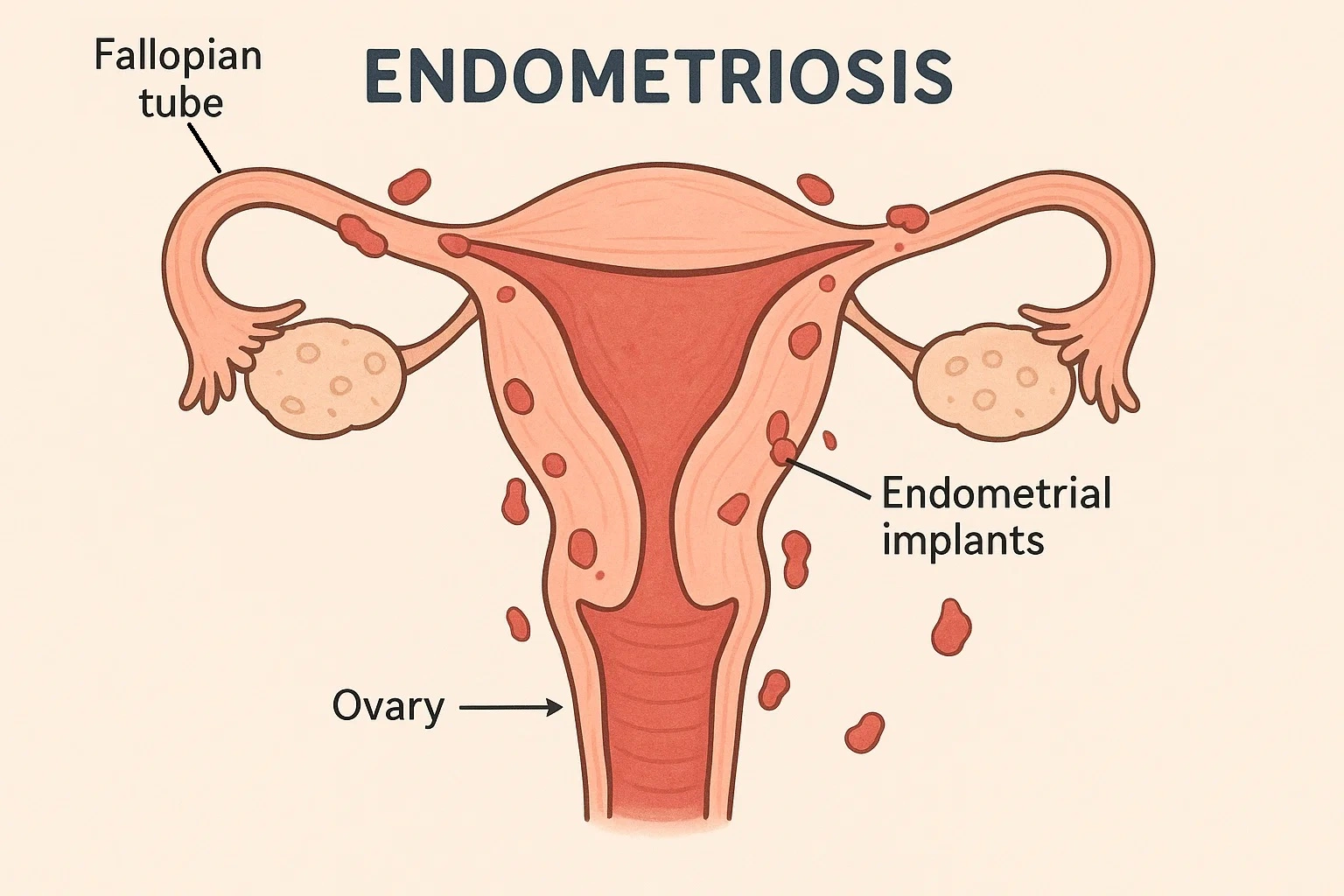
Endometriosis occurs when endometrial-like tissue—similar to the lining of the uterus—starts growing outside the uterus. These tissues may stick to the ovaries, fallopian tubes, pelvic walls, intestines, or bladder. In rare cases, the tissues even show up in the lungs or abdominal scars.
Even though it grows outside the uterus, this tissue responds to monthly hormonal changes just like the uterine lining. So, it thickens, breaks down, and bleeds every month. But the blood has nowhere to go, leading to inflammation, scar tissue formation, cysts, and severe pain.
Prevalence
Endometriosis affects nearly 1 in 10 women of reproductive age. However, the real numbers might be higher because many cases are never formally diagnosed.
Why Sudha Fertility Centre Focuses Strongly on Endometriosis
Many patients walk into Sudha Fertility Centre after years of misdiagnosis. The centre offers a structured diagnostic protocol, laparoscopy, and targeted fertility treatments that give patients a better chance of pain relief, healing, and conception.
Stages of Endometriosis (ASRM Classification)
Doctors classify endometriosis based on the severity of lesions:
Stage I – Minimal
A few lesions or small patches with little to no scarring.
Stage II – Mild
More lesions and deeper implants.
Stage III – Moderate
Ovarian cysts (endometriomas) and beginning of adhesions.
Stage IV – Severe
Large cysts, thick adhesions, organs sticking together, and heavy scarring.
Interestingly, the stage does not always match the level of pain. Even mild endometriosis can cause unbearable discomfort, while some women with severe disease may barely notice symptoms.
Sudha Fertility Centre’s specialists emphasize individual-based treatment, not just stage-based treatment.
Symptoms: The Silent Clues Women Often Ignore
Symptoms of endometriosis vary so much that it often gets confused with PCOS, PID, IBS, digestive issues, or even urinary infections. Many women suffer for years before getting answers.
Below are the most common symptom groups:
A. Pain-Related Symptoms
-
Severe period pain that affects daily routine
-
Pain during intercourse
-
Chronic pelvic pain
-
Pain while urinating or passing stools
Many women say the pain feels like “something is pulling, twisting, or burning inside.”
B. Menstrual Symptoms
-
Heavy menstrual bleeding
-
Clots
-
Short menstrual cycles
-
Spotting between cycles
C. Digestive Symptoms
-
Constipation
-
Diarrhea
-
Bloating and gas
-
Nausea during or before periods
Since these symptoms overlap with IBS, misdiagnosis becomes common.
D. Fertility-Related Symptoms
Difficulty conceiving is one of the biggest signs that often leads to the discovery of endometriosis. Around 30–50% of women with infertility are found to have endometriosis.
At Sudha Fertility Centre, many patients first come in thinking they only have fertility problems—only to discover endometriosis through evaluation.
Causes & Risk Factors—Why Does Endometriosis Occur?
There is still no single, confirmed cause. Doctors believe it may be due to a combination of:
A. Retrograde Menstruation
Menstrual blood flows backwards into the pelvic cavity. Although this happens even in women without endometriosis, the body’s inability to clear this tissue may trigger the disease.
B. Hormonal Imbalance
High estrogen levels may encourage abnormal tissue growth.
C. Immune System Dysfunction
The immune system may fail to destroy stray endometrial cells.
D. Genetic Predisposition
Women with a mother or sister who has endometriosis are 7–10 times more likely to develop it.
E. Coelomic Metaplasia Theory
Cells in the pelvic lining transform into endometrial-like cells.
Risk Factors Include:
-
Early periods
-
Short cycles
-
Long durations
-
Family history
-
Autoimmune disorders
Sudha Fertility Centre uses hormone profiling, genetic history analysis, and pelvic evaluation to identify risk early and guide treatment accordingly.
How Endometriosis Affects Fertility
Endometriosis can impact fertility in many ways, depending on the severity and location of lesions.
A. Blocked Fallopian Tubes
Adhesions can block or distort tubes, preventing egg and sperm from meeting.
B. Ovarian Endometriomas
These cysts can damage ovarian tissue, reduce egg reserves, and affect egg quality.
C. Inflammatory Reaction
Inflammation may weaken sperm, reduce fertilization, or prevent implantation.
D. Disturbed Pelvic Anatomy
Organs sticking together due to adhesions makes natural conception difficult.
Sudha Fertility Centre’s Fertility Evaluation
Patients undergo:
-
AMH test
-
Antral Follicle Count
-
HSG or SSG
-
Transvaginal Ultrasound
-
Laparoscopy if needed
This helps doctors decide whether natural conception, IUI, or IVF offers the best chance of pregnancy.
Diagnosis of Endometriosis
Diagnosing endometriosis isn’t always straightforward because symptoms mimic many other conditions.
Standard Diagnostic Steps Include:
Clinical Examination
A pelvic exam may reveal tenderness, nodules, or masses.
Transvaginal Ultrasound (TVS)
Useful for detecting ovarian cysts.
Pelvic Ultrasound
Helps identify structural abnormalities.
MRI Scan
Best for deep infiltrating endometriosis.
Diagnostic Laparoscopy
This is the gold standard. It confirms diagnosis and allows immediate treatment such as removing lesions or breaking adhesions.
Emerging Diagnostics
-
CA-125 blood marker
-
Ongoing biomarker research
Sudha Fertility Centre is equipped with advanced imaging and laparoscopic technology, enabling early and accurate diagnosis.
Treatment Options for Endometriosis
Treatment is tailored based on severity, symptoms, age, and whether the patient wishes to conceive.
Medical (Non-Surgical) Management
1. Pain Relief
NSAIDs help reduce pain and inflammation.
2. Hormonal Therapy
These medications prevent ovulation and reduce estrogen, slowing endometrial growth.
These include:
-
Combined contraceptive pills
-
Progestins
-
GnRH agonists
-
GnRH antagonists
3. Injectable Hormone Therapy
Used in more moderate cases or before IVF treatment.
Sudha Fertility Centre uses carefully planned hormonal protocols to minimize recurrence while preserving fertility potential.
Surgical Treatment
Laparoscopy is the most effective surgical method. It aims to:
-
Remove endometrial implants
-
Excise ovarian cysts
-
Break adhesions
-
Restore normal pelvic anatomy
Sudha Fertility Centre’s highly skilled laparoscopic surgeons specialize in fertility-preserving surgeries.
Lifestyle & Complementary Management
Some lifestyle steps help control flare-ups:
-
Anti-inflammatory diet
-
Reducing red meat and dairy
-
Omega-3 rich foods
-
Yoga, stretching, physiotherapy
-
Stress management
-
Adequate sleep
Sudha Fertility Centre’s nutritionists and counselors help patients adopt routines that support pain reduction and hormonal balance.
Endometriosis & IVF: When Should You Consider IVF?
IVF becomes a suitable option in the following situations:
-
Moderate to severe endometriosis
-
Tubal block or adhesions
-
Low ovarian reserve
-
Age above 35
-
Failed natural conception after laparoscopy
IVF Success at Sudha Fertility Centre
Sudha Fertility Centre has built a strong reputation for high IVF success rates, especially in endometriosis-related infertility. Success rates vary by age group, but patients commonly experience:
-
High fertilization rates
-
Implantation success
-
Reduced miscarriage rates
Also read: Infertility Symptoms, Causes, Tests & IVF Treatment Male & Female Infertility Guide
Real Success Stories
The centre frequently sees women conceive after years of trying naturally. Many patients who had multiple failed attempts elsewhere succeeded after personalized IVF protocols at Sudha Fertility Centre.
Popular Search Queries
-
IVF success rate in India for endometriosis
-
Can stage 4 endometriosis patients get pregnant with IVF?
Prevention & Lifestyle Support
You can’t prevent endometriosis fully, but you can reduce flare-ups and future risk.
Tips Include:
-
Anti-inflammatory diet
-
Maintaining healthy weight
-
Reducing exposure to plastics and chemicals
-
Managing stress
-
Regular exercise
-
Early screening if symptoms appear
Sudha Fertility Centre encourages women to undergo early consultation to avoid complications like ovarian reserve loss.
Emotional Well-Being & Counselling
Living with chronic pelvic pain can be emotionally exhausting. Women may experience:
-
Anxiety
-
Depression
-
Relationship strain
-
Fear about fertility
Sudha Fertility Centre provides one-on-one counseling, support groups, and fertility mental wellness programs for both women and their partners.
These sessions help women feel heard, validated, and empowered.
Sudha Fertility Centre: Why Women Trust Their Endometriosis Care
Sudha Fertility Centre offers:
Multiple Branches Across South India
Making access easier for patients from different regions.
A Dedicated Endometriosis & Fertility Care Unit
Combining gynecologists, laparoscopic surgeons, fertility specialists, nutritionists, and counselors.
Advanced Technology
-
3D/4D ultrasound
-
High-definition laparoscopy
-
IVF labs with world-class equipment
Proven Success Stories
Hundreds of women with mild, moderate, or severe endometriosis have successfully conceived after treatment here.
Frequently Asked Questions
1. What causes endometriosis?
A mix of hormonal, genetic, and immune factors.
2. Can endometriosis go away on its own?
It usually doesn’t, but symptoms can be managed.
3. Can I get pregnant naturally?
Many women do, but fertility may decline with severity.
4. Is laparoscopy safe?
Yes, and it’s the gold standard for diagnosis and treatment.
5. Do I need IVF if I have endometriosis?
Not always. It depends on severity, age, ovarian reserve, and tubal condition.
6. Can diet help?
Yes, anti-inflammatory foods can reduce inflammation.
Conclusion
Endometriosis is a complex condition, but it doesn’t have to control your life. With the right diagnosis, treatment, and emotional support, women can manage symptoms, improve fertility, and even achieve pregnancy successfully.
If you are facing severe period pain or struggling to conceive, don’t delay seeking help. Early evaluation ensures better outcomes.
For expert endometriosis and fertility care, reach out to Sudha Fertility Centre. Their specialists are committed to helping women regain control of their health and fulfil their dream of motherhood.

Dr. S. Pradeepa is a fertility specialist at Sudha Fertility Centre, Erode, with expertise in IVF, IUI, ICSI, PCOS, and endometriosis. She holds MBBS, DGO, DNB (OG), and a Fellowship in Reproductive Medicine. Known for her patient-centric approach, she provides personalized, evidence-based care and reviews medical content to guide informed fertility decisions.
Permalink